

+86 571 8659 2517

+86 180 5841 8258

info@zmuni.com



Recently, China's State Administration for Market Regulation (SAMR) released a Q&A document providing further interpretation of the Administrative Measures for the Supervision of Food Labeling. The document addresses 35 questions covering key aspects of food labeling supervision. In this article, ZMUni highlights some of the most commonly asked questions for your reference. What is the relationship between the Measures and GB 7718-2025? Answer: The Measures and GB 7718-2025 National Food Safety Standard General Standard for the Labeling of Prepackaged Food will both take effect at March 16, 2027. The two are complementary and focus on different aspects of

On September 1, 2026, China's General Administration of Customs of China (GACC) released information on food products denied entry at Chinese ports in July 2026. According to the data, 487 batches of imported food were denied entry in July due to non-compliance with food safety, hygiene, and other requirements. This represented an approximately 11% month-on-month decrease from the 548 batches recorded in June, but an approximately 2% year-on-year increase from the 476 batches recorded in July 2025. The 487 rejected batches covered a wide range of product categories, including coffee, frozen meat, poultry and aquatic products, edible oils,
The global cosmetics regulatory environment continues to evolve. To help businesses stay updated with regulatory changes, ZMUni Compliance Center regularly releases a monthly recap of global cosmetics regulations. This article covers the regulatory developments related to cosmetics in China and globally in August 2026, with an emphasis on updates in cosmetic ingredients and cosmetic management, among other areas. China Cosmetic Regulatory Updates New Cosmetics Ingredients (NCI) In August 2026, 5 new cosmetic ingredients were notified with the China National Medical Products Administration (NMPA). They include: The technical requirements for the 5 NCIs mentioned above have not
In August, a total of five new cosmetic ingredients completed notification with China's National Medical Products Administration (NMPA), significantly fewer than in previous months. The technical requirements for all related NCIs have not yet been publicly disclosed. Camellia Petelotii Callus Camellia petelotii is a species of the genus Camellia in the family Theaceae, mainly distributed in southern Guangxi, China, with limited distribution in Yunnan, Guangdong, and other regions. Since 2021, related Camellia chrysantha ingredients have been notified nine times. This marks the first notification of Camellia petelotii callus. The notifier, Hangzhou Shicang Xinya Biotechnology
On August 27, 2026, China's National Center for ADR Monitoring released the Guidelines for Preparing Self-Inspection Reports on Adverse Reactions to Cosmetics by Registrants and Notifiers, providing guidance on the preparation of adverse reaction self-inspection reports by cosmetic registrants, notifiers, and domestic responsible persons in China. Key points of the Guidelines include: Scope & Applicable Entities The Guidelines apply to cosmetic registrants, notifiers, and domestic responsible persons in China. Strict Reporting Deadlines Serious adverse reactions: A self-inspection report must be submitted within 20 days from the date the adverse reaction is identified/known. Adverse reactions that
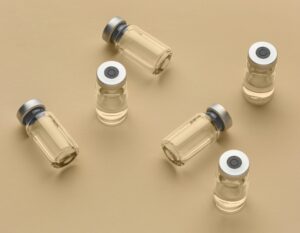
Ampoules, vials, and syringe-type containers—packaging formats commonly associated with pharmaceutical and injectable products—are increasingly used for cosmetic products such as serums and concentrated skincare treatments. However, these formats may be subject to regulatory considerations beyond those applicable to conventional cosmetics, as their appearance can create a risk of consumer misunderstanding or misuse. Thailand is one market where this distinction is particularly important. The Thai Food and Drug Administration (Thai FDA) has established specific requirements for cosmetic products packaged in ampoules, vials, or syringe-type containers, covering their intended use, packaging, labeling, and supporting documentation. In this article, ZMUni Compliance Centre
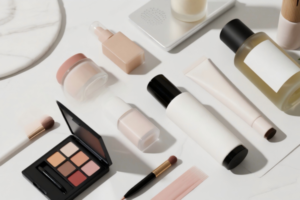
On August 24, 2026, China's National Medical Products Administration (NMPA) issued the cosmetics industry standard YY/T 10006—2026, General Technical Requirements for Cosmetic Product Standards. The standard will take effect on January 1, 2027. The standard aims to establish a unified framework for developing cosmetic product standards, including rules for product classification and baseline technical requirements. Given the diversity of cosmetic products and the overlap of factors such as product form, manufacturing process, intended efficacy, application site, and method of use, product categories must be clearly defined when developing product standards. The standard requires cosmetic product

On August 19, 2026, China's National Institutes for Drug Control (NIDC) made the fifth dynamic adjustment to the Inventory of Existing Cosmetic Ingredients in China (IECIC). Four new cosmetic ingredients — CETYL DIGLYCERYL TRIS(TRIMETHYLSILOXY)SILYLETHYL DIMETHICONE, NICOTINAMIDE MONONUCLEOTIDE, BAKUCHIOL and AZELAMIDOPROPYL DIMETHYL AMINE — have completed their three-year safety monitoring period. Following an assessment confirming compliance with the Cosmetic Supervision and Administration Regulation (CSAR) and other applicable requirements, they have been added to List II of the IECIC. For companies, inclusion in List II means that these ingredients have transitioned from "new cosmetic ingredients" to "existing cosmetic ingredients",
+86 571 8659 2517
+86 180 5841 8258
info@zmuni.com